The heck is the point of a test if not to confirm or rule out covid? He took two tests, came back negative and assumed his "cold or covid" symptoms were cold until he had reason to believe they were covid. Other than the tests sucking everything in the fact pattern is perfectly reasonable.
Any test has a certain percentage of false positives and false negatives -- in fact, you can likely tune your ratio of false positives to false negatives depending on what your priority is. On a community level, the statistics from testing are essential for monitoring the spread of a disease, but on an individual level a test can still give an incorrect result, so shouldn't be the only factor when making decisions.
For an individual, if they have a negative test AND no symptoms AND no contacts with known COVID-positive individuals, then they can proceed as-if they don't have COVID and take standard precautions. However, if they do have symptoms, then that might mean further testing is required.
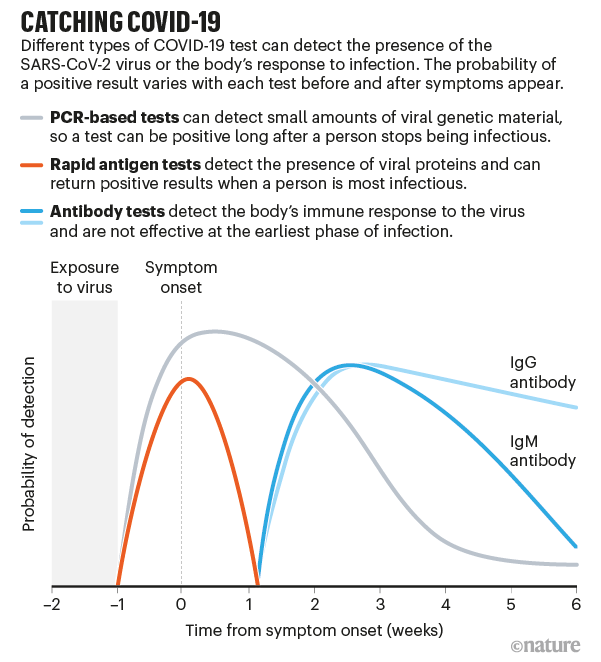
For anyone interested about testing, this graphic is essential:
It shows the difference in test efficacy for different tests (rapid antigen, PCR, antibody tests) as a function of time from symptom onset.
Rapid antigen tests only have a narrow window of efficacy. If they come back positive, you likely have COVID, but if they come back negative you could still have COVID and could still be contagious.
This is also why many countries are requiring PCR tests prior to entry, because they are more effective than rapid antigen tests, although can also give false negatives, especially early after exposure.
In my opinion, the rapid test's greatest value is using it to screen asymptomatic people in a regular (daily or weekly) process. For example, a school would test a random sample of students each day. This could help catch any stealthy clusters. It's not perfect, but it's better than just looking for symptoms.
It's also subtle in that while false negatives are common, false positives are rare (very rare). But general public don't get that subtlty and assume "the test isn't reliable" so a positive means they're not infected.
Almost no tests in existence can confirm or deny particular infection.
Think of them (and symptoms) more as odds updater. If you have 20 minutes to spare this video [0] by 3 Blue 1 Brown is a brilliant introduction to the concept.